
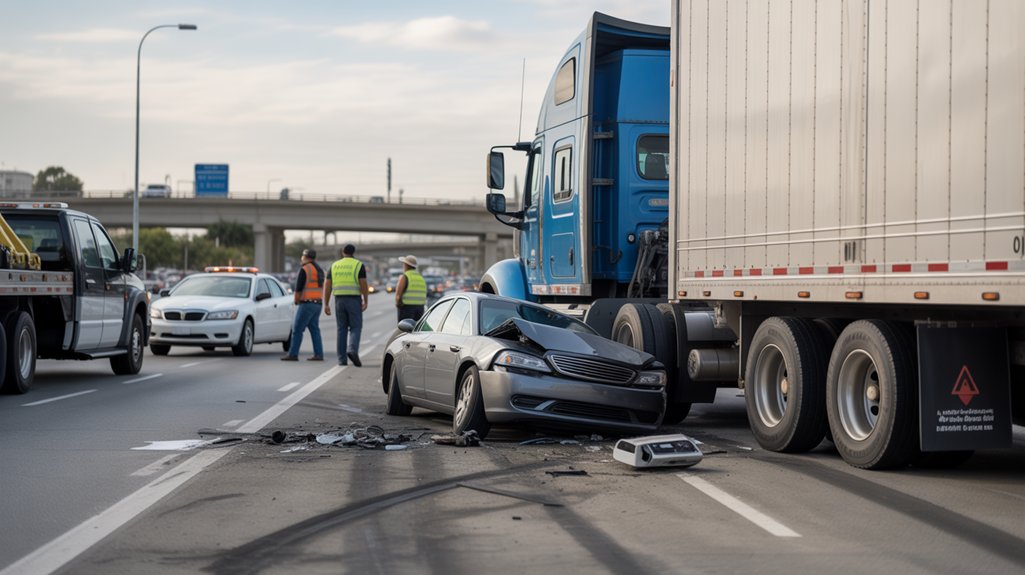

After an Anaheim truck crash, you might assume the driver is the only one at fault, but that’s often not the full story. The carrier, shipper, or even a manufacturer could share responsibility if poor training, unsafe loading, or a defective part helped cause the wreck. California law can split fault in more than one direction, and the evidence often tells a different story than first reports suggest.
Main Points
- Liability can fall on the truck driver, carrier, shipper, maintenance shop, or manufacturer, depending on who caused the crash.
- California’s comparative negligence rules let fault be shared, with compensation reduced by the injured person’s percentage of blame.
- Driver fault is shown through evidence like black box data, witness statements, photos, medical records, and company logs.
- Carrier negligence may involve bad hiring, poor training, unsafe schedules, missed maintenance, or pressure to violate safety rules.
- Shipper overloads, defective parts, or ignored recalls can also create liability for cargo handlers, suppliers, and manufacturers.
Who Can Be Liable in an Anaheim Truck Accident?
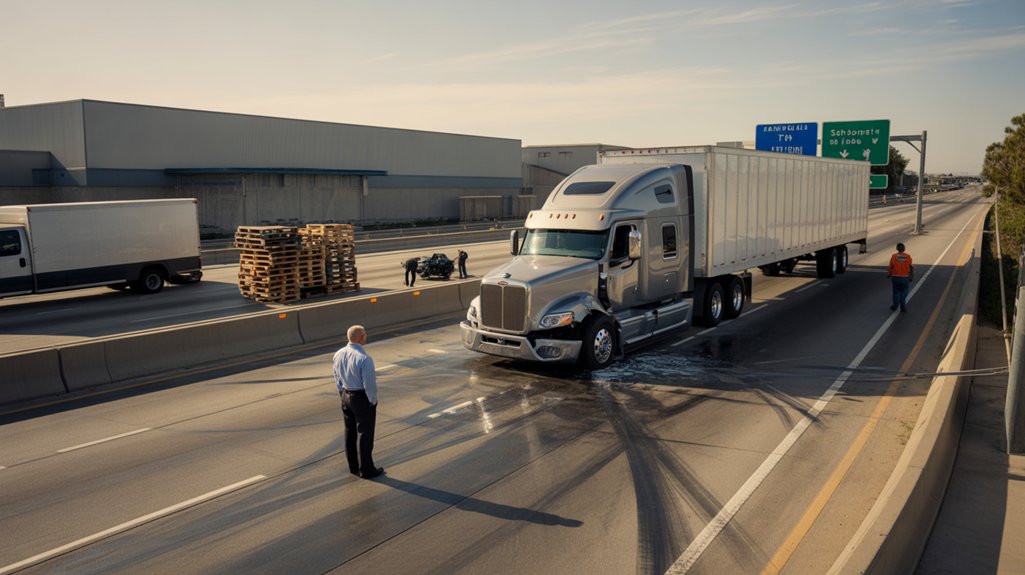
Several parties can be liable in an Anaheim truck accident, and who you can hold responsible depends on what caused the crash.
You may have a claim against the trucking company if it hired an unqualified driver, skipped training, or pushed unsafe schedules.
A shipper or loader can share fault when it overloads a trailer or secures cargo poorly.
Maintenance contractors can be liable if they miss worn brakes, tires, or steering defects.
The truck or parts manufacturer may also bear responsibility when a design or production flaw causes failure on the road.
In some cases, a government agency or other motorist contributed to the collision.
You’ll need evidence to connect each party’s conduct to your injuries, so act quickly and preserve records, photos, and witness information.
When the Truck Driver Is at Fault
When the truck driver caused the crash, you may be able to hold that driver personally liable for your injuries. You’d need to show the driver breached a duty of care and that breach caused your losses. Common examples include speeding, texting, tailgating, unsafe lane changes, or driving while fatigued. Evidence matters, so save photos, witness names, and medical records.
| Driver action | Why it matters |
|---|---|
| Speeding | Cuts reaction time |
| Distracted driving | Misses hazards |
| Fatigue | Slows judgment |
| Unsafe turns | Causes side impact |
| Impairment | Raises crash risk |
If the facts support your claim, you can seek payment for medical bills, lost income, pain, and other harm.
How the Carrier Can Share Responsibility
Sometimes, the trucking company can share responsibility for a crash if its own actions helped cause it. You may have a claim against the carrier when it hires an unqualified driver, skips required training, ignores hours-of-service rules, or fails to maintain brakes, tires, or lights.
If dispatch pressures drivers to meet unsafe deadlines, the company can also bear fault. You don’t have to prove the driver acted alone; a carrier’s negligent policies, supervision, or maintenance can make it legally responsible too.
In some cases, the company’s insurer covers your losses, so you should document logs, inspection records, and payroll data quickly. An Anaheim truck crash attorney can help you identify which corporate failures contributed to your injuries and build a claim that reflects the full scope of responsibility.
Can the Shipper Be Liable Too?
A trucking crash may involve more than just the driver or carrier, because the shipper can also play a role if its actions helped create the danger.
You may have a claim against the shipper if it overloaded the trailer, hid hazardous cargo, failed to secure freight properly, or gave rushed loading instructions that made the load unstable.
In those situations, the shipper’s conduct can contribute to a collision, rollover, or spilled cargo.
You’ll need evidence showing the shipper knew, or should’ve known, its choices created an unsafe condition. That proof may come from bills of lading, loading records, emails, or witness statements.
A careful investigation can help you identify everyone who shares fault, so you’re not left pursuing only the driver when another company helped cause your losses.
When a Manufacturer’s Defect Causes a Crash
If a defective part caused your truck crash, the manufacturer may be responsible for the damage. You’ll need evidence showing the part was flawed and that the defect caused the collision.
That proof can help establish liability and support your claim.
Defective Parts Liability
When a defective truck part causes a crash, the manufacturer, distributor, or another company in the supply chain may share responsibility for your injuries. If a faulty brake, tire, steering component, or coupling fails, you can pursue the business that put that part into commerce.
Liability isn’t limited to the company that built the truck; it can extend to anyone who designed, assembled, sold, or supplied the dangerous component. You may also have claims against a maintenance vendor if it installed an unsafe part or ignored a recall.
These cases matter because one bad component can trigger a rollover, jackknife, or rear-end collision in seconds. When you’re hurt, you deserve to know every responsible party, so you can seek full compensation for medical bills, lost income, and pain.
Proving Product Defects
Proving a product defect usually means showing that the truck part was unreasonably dangerous and that the flaw caused the crash and your injuries.
You’ll need evidence that the part failed because of a design flaw, a manufacturing mistake, or missing warnings.
Photos, inspection reports, recall notices, maintenance records, and black box data can help connect the defect to the wreck.
Expert witnesses often compare the part to safe industry standards and explain how it should’ve worked.
You must also show that you used the product normally and that no other cause better explains the failure.
If the defective brake, tire, coupling, or steering system triggered the collision, the manufacturer may share liability for your losses, including medical bills, lost income, and pain.
Evidence That Proves Truck Accident Liability
When you’re trying to prove truck accident liability, you’ll want to gather the strongest evidence right away.
Driver logs and records can show whether the driver broke hours-of-service rules, while black box data can reveal speed, braking, and other critical details.
Inspection and maintenance records can also expose unsafe truck conditions that may’ve helped cause the crash.
Driver Logs And Records
Driver logs and related records can play a pivotal role in proving who caused a truck accident in Anaheim. You can use hours-of-service logs, inspection reports, dispatch notes, fuel receipts, and delivery paperwork to show whether the driver followed safety rules or pushed past legal limits.
These records may reveal fatigue, skipped breaks, missed inspections, or pressure from a carrier to keep driving. If entries conflict with route sheets or timestamps, that inconsistency can support your claim.
You should also look for missing pages, altered dates, or incomplete entries, because gaps often matter. When you gather these documents early, you strengthen your ability to trace fault to the driver, carrier, or another responsible party and build a clearer case for compensation.
Black Box Data
Truck black box data can be some of the strongest evidence in an Anaheim accident claim because it shows exactly what the vehicle was doing before, during, and after the crash. You can use it to confirm speed, braking, steering, and sudden changes that point to fault. That data often helps you challenge a driver’s story and support your version of events.
| Data Point | What It Shows | Why It Matters |
|---|---|---|
| Speed | Pre-crash velocity | Helps prove reckless driving |
| Braking | When brakes engaged | Shows reaction time |
| Steering | Direction changes | Reveals evasive moves |
| Throttle | Accelerator use | Indicates control issues |
| Time stamps | Event timeline | Links actions to impact |
When you act fast, your lawyer can preserve this evidence before it’s lost or overwritten.
Inspection And Maintenance Records
Inspection and maintenance records can quickly reveal whether a trucking company let a dangerous problem slip through the cracks. You can use them to see if brakes, tires, lights, steering, or coupling systems were inspected on schedule and repaired before the crash.
When logs show skipped inspections, repeated defects, or fake entries, they can point straight to carrier negligence. If the same issue appears over and over, you may also uncover a maintenance shop’s failure or a manufacturer’s defect.
Compare the records with the truck’s physical condition, black box data, and driver reports. Gaps between noted problems and actual repairs matter. A clean record helps the defense, but a messy one can prove the company knew the truck was unsafe and still sent it out.
How California Law Splits Fault
When a truck accident happens in Anaheim, California’s comparative negligence rule lets fault be shared among everyone who contributed to the crash. That means you can recover damages even if you were partly at fault, but your award drops by your percentage of blame.
If a truck driver sped, a carrier ignored safety rules, and you changed lanes without signaling, a jury can divide responsibility among all three. The same rule applies if a shipper overloaded cargo or a manufacturer sold a defective part.
You don’t need one person to carry all the blame for liability to exist. Each defendant can pay for the harm their conduct caused, and your share simply reduces what you collect.
Why a Truck Accident Lawyer Matters
Because truck accident claims can involve multiple defendants, insurance companies, and strict legal deadlines, a truck accident lawyer can make a major difference in the outcome of your case. You need someone who can identify every liable party, preserve evidence, and push back when insurers try to shift blame. Your lawyer can compare driver logs, maintenance records, and shipping documents to build a stronger claim.
| Task | Benefit |
|---|---|
| Investigate crash facts | Find fault |
| Handle insurers | Protect your claim |
| Track deadlines | Keep your case alive |
| Value damages | Pursue full compensation |
| Negotiate settlement | Improve recovery |
With legal help, you can focus on healing while your attorney manages strategy, filings, and settlement talks.
Frequently Asked Questions
How Does Insurance Coverage Affect Truck Accident Compensation?
Insurance coverage can limit or expand what you recover, because you’ll usually collect only up to policy limits unless multiple policies apply. You can pursue underinsured coverage, too, if the trucker’s insurance isn’t enough.
Can Multiple Defendants Be Sued in One Truck Accident Case?
Yes, you can sue multiple defendants in one truck accident case, and you’d often should if several parties share fault. You’ll increase your chances of recovering full compensation from everyone responsible.
What if the Truck Driver Was an Independent Contractor?
If the driver was an independent contractor, you can still sue them, and you may also pursue the carrier or others if they controlled the work, caused the crash, or negligently hired them.
How Long Do I Have to File a Truck Accident Claim?
You usually have two years to file a truck accident claim in California, but deadlines can differ. Don’t wait—you should speak with a lawyer quickly, because evidence disappears and your rights can expire.
Are Punitive Damages Available in Anaheim Truck Accident Cases?
Yes, you can sometimes recover punitive damages if you prove the defendant acted with fraud, malice, or reckless disregard. You’ll need strong evidence, and California courts rarely award them in ordinary truck accident cases.
See The Next Post
So, who’s really on the hook after an Anaheim truck crash? Sometimes it’s the driver, sometimes the carrier, the shipper, or even the manufacturer—and often, it’s a mix of all four. Like a chain, a truck accident is only as strong as its weakest link. If you want the full picture and the full recovery, you’ve got to uncover every liable party, every piece of evidence, and every missed detail.

0 Comments