
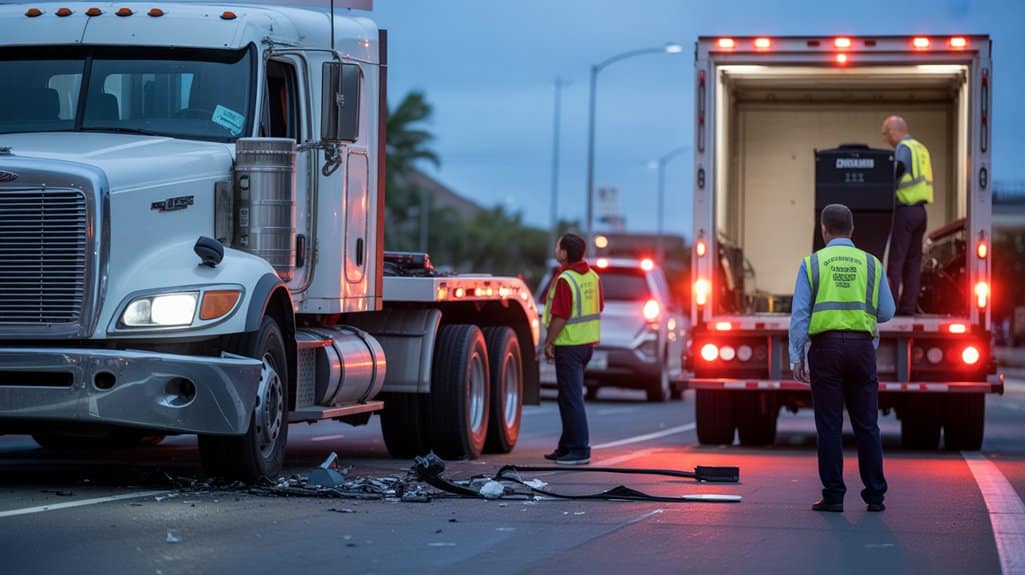

You’re hit by a jackknifed semi on the 5, and before you can fully document the scene, the carrier sends a tow truck, limits photos, and starts collecting the driver’s paperwork. You may not realize how fast logbooks, dashcam clips, GPS data, and maintenance files can disappear, or how a spoliation letter can force the company to preserve them. The next few steps can change what evidence you’ll ever see.
Main Points
- Trucking companies may quickly contact drivers, tow operators, and insurers to control the narrative and limit damaging details.
- Towing, repairs, and cleanup can erase skid marks, debris, and defect evidence within hours.
- Dashcam, GPS, ELD, and black box data can be deleted, overwritten, or altered if not preserved immediately.
- Maintenance files, inspection logs, dispatch messages, and driver records often reveal hidden violations or pressure to rush.
- A spoliation letter demands preservation of every record and device, helping stop deletions and support sanctions if evidence disappears.
How Trucking Companies Hide Evidence After a Crash
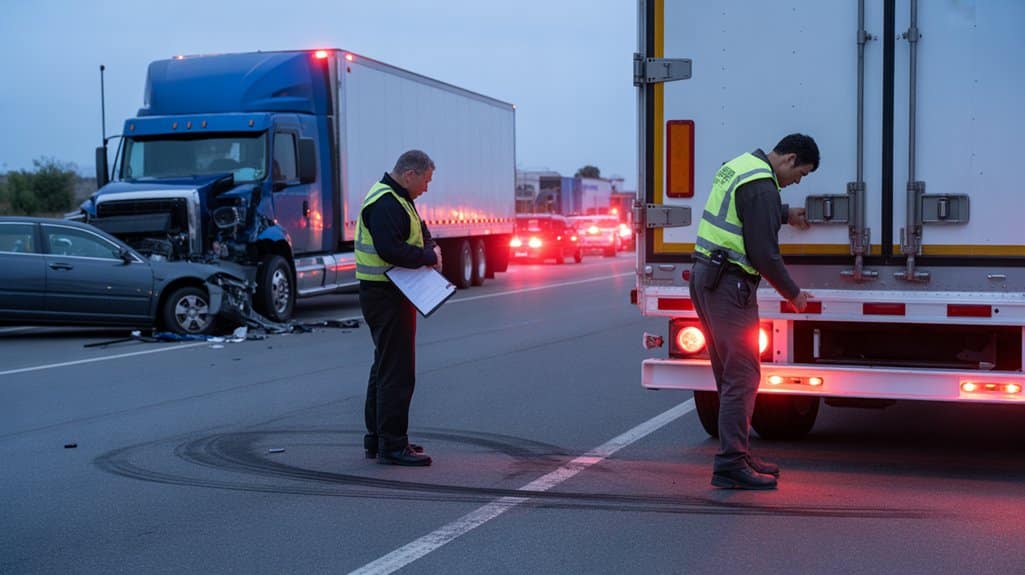
After a crash, a trucking company may move fast to control the evidence before anyone can fully investigate.
You might see managers call drivers, tow operators, and insurers within minutes, shaping the story before you can. They can withhold logs, delay access to the truck, and steer you toward a quick settlement. They may also direct employees to give careful answers, limit photos, and keep internal messages off the record.
If you don’t act quickly, you can lose leverage and miss proof that shows what really happened. That’s why you should demand preservation immediately and send a spoliation letter right away. It puts the company on notice, makes destruction risky, and helps you protect the records you’ll need to prove fault and damages.
What Evidence Vanishes First in an Anaheim Wreck?
The clock starts ticking on key proof the moment an Anaheim truck wreck happens. You’ll often lose the most fragile evidence first: vehicle damage patterns, skid marks, gouge marks, and debris fields. Rain, traffic, street sweepers, and roadside cleanup can erase them within hours. Trucks may also get repaired, towed, or inspected, making defects harder to spot later.
Electronic data can disappear too if someone powers down the truck, overwrites logs, or replaces devices. Dashcam footage, GPS records, dispatch messages, and maintenance notes can all be altered or deleted fast. Even a driver’s recollection fades quickly, especially after repeated conversations with the company. If you wait, you may end up fighting over scraps instead of proving exactly how the crash happened.
Spoliation Letter Basics for Truck Accident Claims
A spoliation letter tells the trucking company to preserve all evidence tied to the crash, from driver logs and dispatch records to maintenance files, dashcam video, GPS data, and the truck itself. You use it to put the company on notice that it mustn’t alter, delete, or lose anything that could show what happened. The letter should identify the crash, the vehicles, and the records you want kept.
A spoliation letter puts the trucking company on notice to preserve crash evidence before it disappears.
- Driver logs and hours-of-service data
- Electronic control module and GPS information
- Inspection, repair, and camera records
You don’t need fancy legal jargon; you need a clear demand that targets the evidence that matters. When done right, this letter helps protect your claim and makes it harder for the carrier to claim the proof is gone.
Send the Spoliation Letter Before Evidence Disappears
Send the spoliation letter as soon as you can after the crash, because trucking companies can overwrite, delete, or repair evidence fast.
You should send it before they move the truck, fix damage, or let photos vanish.
A prompt letter tells the company to preserve the vehicle, trailer, crash scene images, dispatch notes, maintenance files, and any other records tied to the wreck.
It also puts them on notice that they can’t claim ignorance later.
Send it to the carrier, its insurer, and anyone else controlling the evidence.
Keep proof of delivery, and save a copy for your file.
The faster you act, the stronger your claim stays, and the harder it becomes for them to hide what really happened.
Driver Logs, ELD Data, and Hours-of-Service Records
You’ll want to check driver logs for gaps, because missing entries can signal hours-of-service violations or a bigger effort to hide what really happened.
ELD data can show whether the truck’s electronic records match the paper trail, so you should demand that it’s preserved right away.
If those records change or disappear, your case can lose critical proof of fatigue, timing, and compliance.
Driver Log Gaps
When a crash happens, driver logs, ELD data, and hours-of-service records can quickly become critical evidence—but gaps in those records often tell a story of their own.
You may see missing hours, unexplained edits, or log entries that don’t match the route, fuel stops, or witness accounts. Those gaps can point to fatigue, rushed driving, or later manipulation. You should treat them as red flags, not harmless clerical mistakes.
- Missing shifts or duty status changes
- Inconsistent start, stop, or break times
- Entries that conflict with the crash timeline
If you act fast, you can document these gaps before the carrier blames “technical issues” or “driver error.”
A spoliation letter puts the company on notice that you expect those records to stay intact and available.
ELD Data Preservation
ELD data can disappear fast after a truck crash, so act immediately to preserve driver logs, electronic logging device records, and hours-of-service data before anyone overwrites or “corrects” them. You should demand a spoliation letter right away and identify every device, account, and backup that may hold driving time, edit history, location data, and login information.
Trucking companies may claim a “glitch,” reset a unit, or reclassify a driver’s status to hide fatigue or rule violations. If you wait, they can lose the audit trail that proves when the truck moved and who edited the records. Your attorney can force preservation, compare ELD entries with dispatch records, fuel receipts, and GPS data, and expose any mismatch that shows the company tried to cover up dangerous hours-of-service violations.
Dashcam Footage, Black Box Data, and GPS Tracking
You need to act fast to preserve dashcam footage before a trucking company deletes or overwrites it.
You can also request black box data to capture speed, braking, and impact details that may otherwise disappear.
GPS route tracking can show where the truck went and help expose any last-minute changes in its path.
Dashcam Footage Preservation
Dashcam footage, black box data, and GPS records can disappear fast after a crash, so act quickly to preserve them. You should send a spoliation letter right away and demand that the trucking company save every video file, log, and timestamp before anyone overwrites or deletes them. If you wait, the evidence can vanish, and you’ll lose key proof of speed, lane position, and impact.
- Request the truck, trailer, and yard cameras
- Demand preservation of all event-related video
- Notify the insurer and carrier in writing
You also need to identify every device that may have recorded the trip, then tell the company not to alter it. Fast action helps keep the record intact and puts pressure on them to comply.
Black Box Data Retrieval
Beyond dashcam video, the truck’s electronic data can tell the rest of the story. You should demand that the carrier preserve the engine control module, event data recorder, and onboard camera files before anyone overwrites them. These systems can show speed, braking, throttle use, and impact timing.
| Data source | What it can show |
|---|---|
| Event recorder | Speed and brake input |
| Engine module | Throttle and fault codes |
| Dashcam system | What the driver saw |
| Cloud backup | Whether files were deleted |
Act fast, because technicians can clear or lose data during routine repairs. Your spoliation letter should block tampering and require a forensic download. That pressure helps you lock down proof before the company spins its story.
GPS Route Tracking
Mapping a truck’s route can reveal what happened before, during, and after the crash. You can compare GPS logs with dashcam footage and black box data to spot sudden stops, detours, speeding, or off-route driving. That timeline may show the driver was rushing, distracted, or trying to avoid a hazard. When a trucking company delays, overwrites, or deletes route data, you lose proof that could support your claim.
- GPS pings show exact locations and times.
- Dashcams capture road conditions and driver behavior.
- Black box records confirm speed, braking, and impact forces.
You should demand this evidence quickly because it can disappear fast. A spoliation letter tells the company to preserve every file, route, and video tied to the truck accident.
Maintenance Files and Inspection Records That Matter
When a trucking company wants to protect itself after a crash, maintenance files and inspection records can matter as much as the truck itself.
You need the dates, repair notes, brake checks, tire logs, and annual inspection reports to see whether the rig was safe before impact.
If the company skipped repairs, stretched service intervals, or ignored repeated defects, those records can expose negligence fast.
You should also look for pre-trip and post-trip inspection forms, because they can show when a driver first noticed a problem.
Missing pages, altered entries, or sudden “lost” folders often signal trouble.
A spoliation letter tells the company to preserve every maintenance document, so you don’t lose proof that the truck failed before the crash.
Dispatch Messages, Emails, and Load Instructions
You should examine dispatch message trails, because they can show who knew what and when.
You should also compare email instructions with later edits, since changes can reveal pressure to shift blame or rewrite the story.
Finally, you should review load order records to see whether the company changed cargo details, routes, or timing after the accident.
Dispatch Message Trails
Dispatch messages, emails, and load instructions can tell the real story of what happened before and after a crash. You should demand the whole message trail fast, because dispatchers often coordinate routes, timing, delays, and updates that show who knew what and when. These records can reveal pressure to keep driving, ignored warnings, or changes made after the collision.
- Texts showing route changes
- Messages about hours, speed, or delays
- Load notes tied to the trip
If you act quickly, you can stop a carrier from deleting or overwriting this evidence. A strong spoliation letter tells them to preserve every message thread, attachment, and routing note. That paper trail can expose blame and strengthen your Anaheim injury claim.
Email Instructions And Edits
Email instructions can fill in the gaps that texts and phone calls leave behind, showing who changed the plan, who approved it, and whether anyone pushed the driver to keep moving after a problem arose. You should demand every version, including replies and forwarded chains, because edits can reveal pressure or blame-shifting.
| Email clue | What you learn | Why it matters |
|---|---|---|
| Subject line change | New urgency | Shows shifting priorities |
| Redlined wording | Edited instructions | Reveals control |
| Timestamp gap | Delay in response | Suggests someone stalled |
If a dispatcher says “proceed carefully” in one draft and “continue as scheduled” in another, you may uncover the real story. Save metadata, not just the message body. That detail can show when someone opened, changed, or deleted the email after the crash, and it can help prove the company tried to hide the truth.
Load Order Records
Load orders can expose what the company knew, when it knew it, and whether someone changed the instructions after the crash.
You should demand every dispatch message, load sheet, and revised instruction right away.
Those records can show unsafe deadlines, overweight cargo, or route changes that pushed the driver into danger.
If the company edits or deletes them, you may lose proof of negligence and spoliation.
Look for:
- Time-stamped dispatch notes
- Email chains with load changes
- Instructions about speed, rest, or delivery pressure
You can use a spoliation letter to freeze these records and stop backdating or “cleanup.”
That letter tells the carrier to preserve originals, metadata, and backups.
If they don’t, a court may punish them and let you argue the missing records hurt your case.
What Happens When a Trucking Company Spoliates Evidence?
When a trucking company spoliates evidence, it can seriously undermine your ability to prove what really happened after a crash.
A trucking company’s spoliation of evidence can seriously undermine your ability to prove what really happened after a crash.
You may lose access to the truck’s black box data, driver logs, maintenance files, dashcam footage, or dispatch records that show fault, hours-of-service violations, or mechanical problems.
Courts don’t treat this lightly. If the company destroys or alters key evidence after it should’ve preserved it, a judge may impose sanctions. Those sanctions can include fines, evidence instructions that favor you, or limits on the company’s defenses.
In severe cases, the court may even strike pleadings or enter default judgment.
Spoliation can also weaken the company’s credibility, making its story less believable and strengthening your claim for damages.
How an Anaheim Truck Accident Lawyer Can Help
If a trucking company hides, alters, or destroys evidence, an Anaheim truck accident lawyer can move quickly to protect your claim. You won’t have to guess what disappeared or why. Your lawyer can send a spoliation letter, demand key records, and press for the black box data, driver logs, dispatch messages, and maintenance files before they vanish.
Your lawyer can also:
- Investigate the crash fast
- Preserve proof from the truck, scene, and witnesses
- Hold the carrier accountable for noncompliance
That early action matters because delays help the defense. With legal pressure, you can uncover what the company knew, when it knew it, and how its choices caused your injuries. Your lawyer can then build a stronger case for compensation and fight back against blame-shifting.
Frequently Asked Questions
How Quickly Do Trucking Companies Delete Evidence After a Crash?
They can overwrite or destroy key data within days or even hours after a crash, so you should act fast. You’ll want to send a spoliation letter immediately to preserve logs, video, and device records.
Can a Spoliation Letter Recover Deleted Truck Evidence?
Yes—sometimes you can. Like a key after a lock changes, a spoliation letter can preserve records, force backups, and support sanctions, but it can’t magically restore data already erased.
Who Should Receive a Spoliation Letter First?
You should send it first to the trucking company and its insurer, then to the driver and any third-party maintenance or cargo vendors, so you’ve covered everyone who might control important evidence.
Are Cell Phone Records Included in Truck Accident Evidence?
Yes, you can include cell phone records in truck accident evidence; they can reveal calls, texts, and distracted driving. You’d use them like a flashlight in fog, exposing moments that shaped the crash.
Can Evidence Destruction Increase a Truck Accident Settlement?
Yes, you can often get a larger settlement if someone destroys evidence, because you can prove fault more easily and seek sanctions. You’ll still need strong proof, but missing records can boost leverage considerably.
See The Next Post
You can’t let the first rush after a crash wash away the truth. While crews sweep gravel, tow bent metal, and silence digital trails, your evidence can slip through the cracks like water into broken pavement. A fast spoliation letter locks the scene in place, preserving logs, photos, messages, and data before they vanish. Act quickly, and you give yourself the chance to hold the trucking company accountable when the dust settles.


0 Comments