
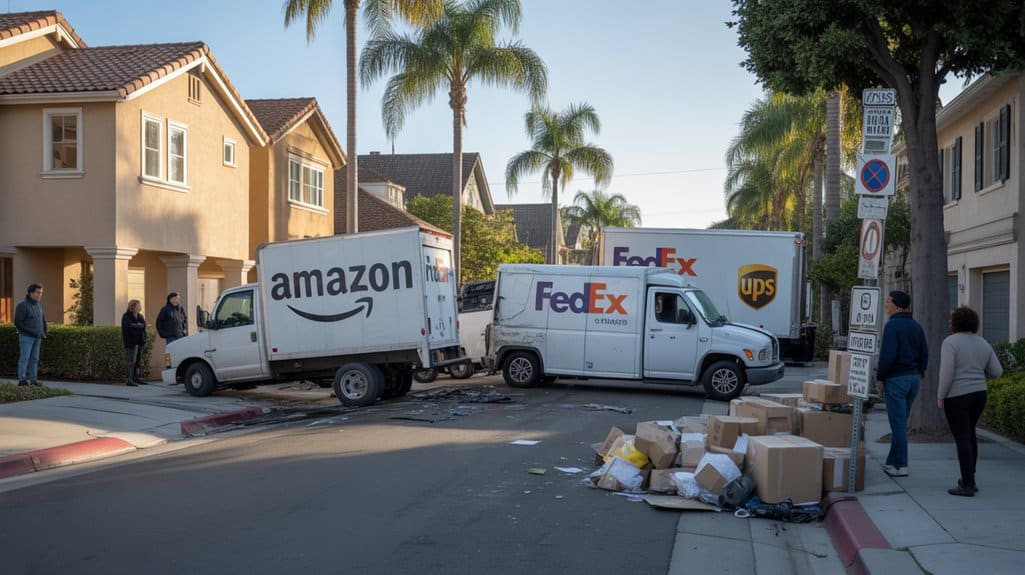
If an Amazon, FedEx, or UPS truck hits you in an Anaheim neighborhood, the answer to who pays isn’t always simple. You may be dealing with the driver, the delivery company, an outside contractor, or several insurers at once. The details of the crash, the driver’s status, and the available evidence can change everything. Before you assume the process is straightforward, there’s one issue that can shift the entire claim.
Main Points
- The driver may pay for careless acts like speeding, distraction, fatigue, or unsafe turns.
- The delivery company may pay if it hired, trained, or scheduled the driver unsafely.
- Amazon, FedEx, or UPS may also be vicariously liable for crashes during work duties.
- Contractors, cargo handlers, or other motorists may share fault depending on the evidence.
- Insurance claims often involve multiple policies, so preserve evidence and avoid early fault admissions.
What to Do Right After a Delivery Truck Crash
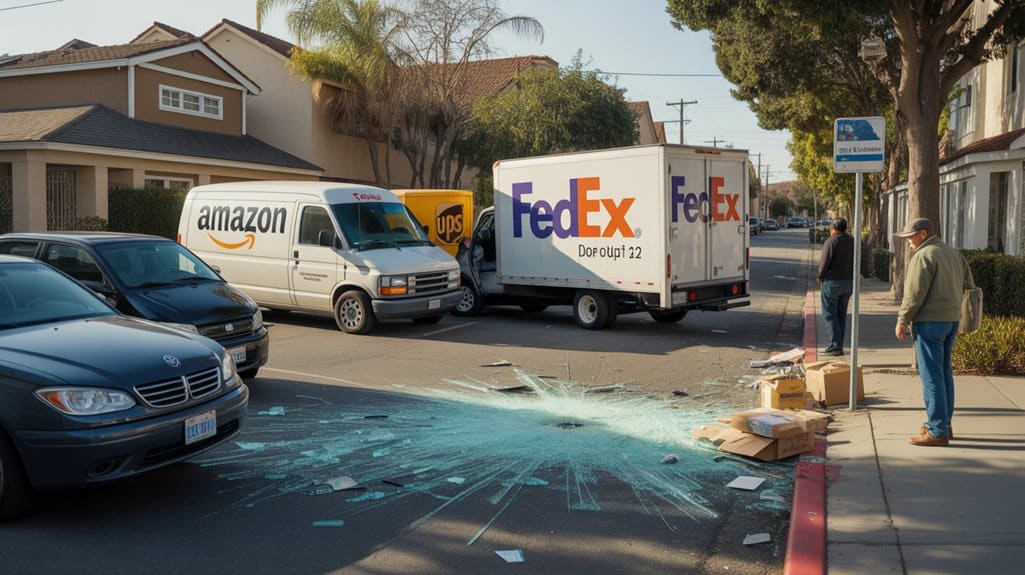
After a delivery truck crash, you need to act quickly to protect your health and your claim. Move to safety if you can, and call 911 right away. Tell responders about every pain, dizziness, or numbness, even if it seems minor.
Take photos of the vehicles, road conditions, skid marks, traffic signals, and visible injuries. Get the truck’s company name, license plate, and driver details, plus contact information for witnesses.
Don’t admit fault or guess about what happened. Seek medical care the same day, because some injuries show up later.
Save your clothing, receipts, and repair records. Report the crash to your insurer, but keep your statement brief. Contact a lawyer soon so you can preserve evidence and meet deadlines.
Who Can Be Liable in an Anaheim Delivery Truck Accident
In an Anaheim delivery truck accident, you may be able to hold the driver liable if careless actions like speeding, distraction, or fatigue caused the crash.
You can also look at the employer, since the company may share responsibility for unsafe schedules, poor training, or bad hiring practices.
Figuring out who’s liable helps you understand where your claim should focus.
Driver Negligence
When a delivery truck driver is speeding, distracted, fatigued, or otherwise careless, that driver can be the first person held liable for an Anaheim crash. If you’re hit, you’ll want to focus on what the driver did behind the wheel: texting, rolling through a stop, tailgating, or making a blind turn. Those choices can show negligence and support your claim.
| Driver behavior | Possible harm |
|---|---|
| Texting while driving | Missed hazards |
| Speeding in traffic | Longer stopping distance |
You can also look for signs of impairment, unsafe lane changes, or failure to yield. The driver’s actions matter because they can directly cause your injuries, vehicle damage, and lost time. Keep photos, witness names, and the police report so you can connect the crash to the driver’s careless conduct.
Employer Responsibility
Even if the driver made the immediate mistake, the delivery company may also share responsibility for your Anaheim crash. If the employer hired an unqualified driver, skipped background checks, or ignored a bad safety record, you may have a claim against the company too.
You can also hold the employer accountable when it pressures drivers to rush, skips training, or sets unrealistic routes and delivery quotas. In many cases, companies are liable for negligence in supervision, vehicle maintenance, or policy failures that help cause the wreck.
If the driver was working at the time, the company may face vicarious liability for actions taken within the scope of employment. That means you may pursue both the driver and the employer to recover damages for your injuries, lost wages, and property damage after an Anaheim delivery truck collision.
Does Amazon, FedEx, or UPS Pay Directly?
Whether Amazon, FedEx, or UPS pays you directly depends on who caused the crash and what coverage applies.
In most cases, you don’t get a personal check from the company simply because one of its trucks hit you. Instead, the company may be responsible through its insurance or another liable party’s coverage.
If the driver was on duty and made a mistake, the employer’s policy may cover your losses. If a contractor, cargo handler, or another motorist caused the collision, payment can come from that source instead.
You should also know that large companies often deny fault at first, so direct payment isn’t automatic. What matters is proving who was responsible and identifying the right insurance backing the claim.
How Insurance Claims Work After a Truck Accident
After a truck accident, the insurance claim process usually starts with reporting the crash, gathering evidence, and notifying every potentially liable insurer.
You’ll often deal with more than one company, including the driver’s insurer, the trucking company’s policy, and sometimes a contractor’s coverage.
Each insurer will review police reports, photos, witness statements, medical records, and any video you can secure.
You should expect adjusters to contact you quickly and ask for your version of events. Be careful: they may try to limit what their insured owes. You don’t have to accept an early offer or give a recorded statement right away.
Instead, you can respond carefully, keep your documents organized, and track every deadline.
If insurers dispute fault, they may negotiate, delay, or transfer responsibility.
What Damages You Can Recover After a Crash
Once the insurance process starts, the next question is what compensation you can actually recover after a delivery truck crash. You can seek damages that cover the losses you’ve already suffered and the harm that may continue.
- Emergency room visits and follow-up care
- Physical therapy, medication, and surgery
- Lost wages and reduced earning capacity
- Vehicle repair or replacement costs
- Pain, suffering, and emotional distress
You may also recover money for future treatment if your injuries need ongoing care. Keep every bill, receipt, and record, because they help prove your losses.
If the crash left you unable to work, document missed shifts and pay cuts. The stronger your evidence, the harder it’s for insurers to downplay what you’re owed.
Why Delivery Driver Status Changes the Case
Delivery driver status matters because it can determine who’s legally responsible for the crash. If the driver works as an employee, you may hold the company liable under respondeat superior when the wreck happened during the job.
If the driver is an independent contractor, you may have to look harder at the delivery platform, vehicle owner, or another business that controlled the route, schedule, or safety rules. That distinction can also affect insurance coverage, claim deadlines, and how much compensation is available.
You should also know that companies sometimes label drivers one way on paper while treating them like employees in practice. Those facts can change your case fast, so you need to identify who actually controlled the delivery, the van, and the driver’s actions at the time of impact.
How an Anaheim Truck Accident Lawyer Helps
An Anaheim truck accident lawyer helps you sort out who’s responsible, preserve key evidence, and build a claim that matches the facts of the crash. You don’t have to guess whether the driver, the delivery company, or another business should pay. Your lawyer can demand logs, camera footage, maintenance records, and employment files before they disappear. They’ll also calculate your losses, handle insurer pushback, and protect you from saying something that hurts your case.
An Anaheim truck accident lawyer preserves evidence, identifies liable parties, and builds the strongest claim for your crash.
- Identify every liable party
- Investigate route, schedule, and dispatch data
- Document injuries, bills, and missed work
- Negotiate with Amazon, FedEx, or UPS insurers
- File suit if settlement talks stall
Frequently Asked Questions
Can I Sue a Delivery Company for a Parking Lot Crash?
Yes, you can sue a delivery company for a parking lot crash if its driver caused your injuries, but you’ll need proof of negligence, damages, and company responsibility; deadlines apply, so act quickly.
What Evidence Should I Save After a Truck Hits My Car?
You should save photos, witness names, police reports, driver details, damage estimates, medical records, and any dashcam footage. Keep emails, texts, and repair invoices too. Don’t repair or discard anything before you document it.
Does a Police Report Help Prove Delivery Truck Fault?
Yes, a police report can help prove fault because you can use it to show the officer’s observations, statements, and citations. It isn’t final proof, but it strengthens your claim with other evidence.
Can Witnesses Affect My Delivery Truck Accident Claim?
Yes—witnesses can strongly support your claim by confirming what happened, who caused it, and how the crash unfolded. You’ll strengthen your case if they saw the truck’s speed, lane changes, or driver mistakes.
How Long Do I Have to File a Claim?
You usually have two years to file, like catching a train before it leaves. If you miss it, your claim may vanish. Don’t wait—act quickly, gather proof, and protect your rights now.
See The Next Post
After a delivery truck crash in Anaheim, don’t guess who pays—find out fast. You may be able to recover from the driver, the company, a contractor, or their insurers, depending on fault and employment status. Acting quickly helps preserve evidence and protect your claim for medical bills, lost wages, and pain and suffering. The right lawyer can help you cut through the confusion, because in these cases, liability isn’t a maze you should walk alone.

0 Comments