
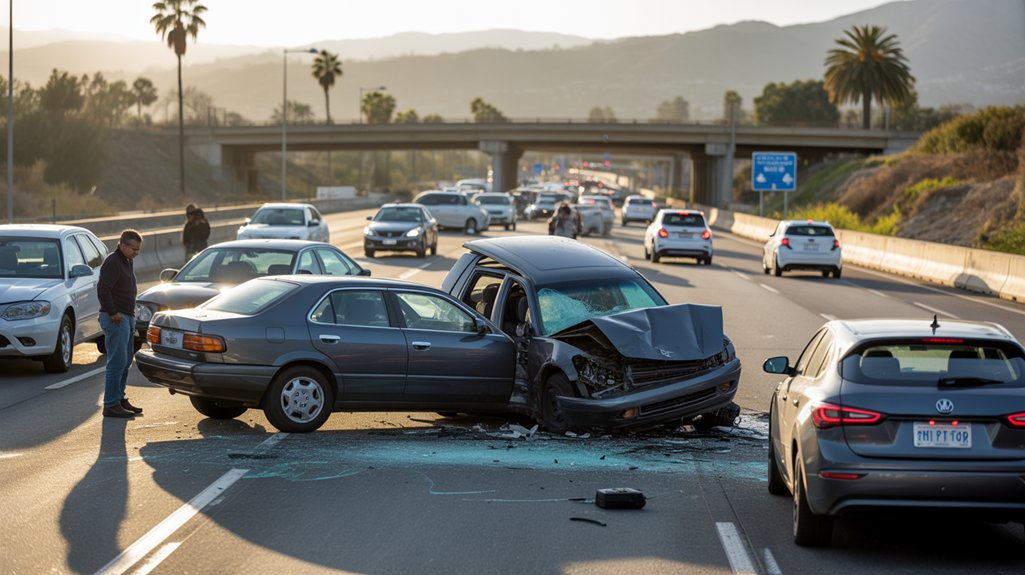

On the 405, every second can feel like a wrong turn in a familiar story. You should move to safety, call 911, and get medical care even if you feel fine. Then you need photos, witness names, and a police report, while you notify your insurer and avoid talking to the other driver’s carrier. What you do next can shape your claim.
Main Points
- Move to safety, turn on hazard lights, and call 911 if anyone is injured or traffic conditions are dangerous.
- Photograph vehicles, skid marks, lane positions, road signs, weather, and freeway location before anything is moved.
- Exchange names, plate numbers, insurance details, and witness contacts, and avoid admitting fault or arguing.
- Seek prompt medical care, follow treatment, and keep all records, bills, and symptom notes for your claim.
- File a police report, notify your insurer, save dashcam evidence, and consult a lawyer for serious injuries or disputed fault.
What to Do Right After the Crash

Right after the crash, take a breath and focus on safety first. You should check yourself and your passengers, then move to a safe spot if you can do it without risking more harm.
Turn on your hazard lights and warn approaching drivers. If your car blocks traffic, stay alert and leave it only when it’s safer outside.
Don’t argue or admit fault; keep your words brief and calm. Use your phone to photograph vehicle damage, skid marks, road signs, and the freeway location.
Gather the other driver’s name, plate number, and insurance details. If witnesses stop, ask for their contact information.
Note the time, weather, and lane positions. These steps help you preserve facts and protect your claim later.
Get Medical Care and Police Reports
Even if you feel okay, get medical care as soon as possible after the crash, because some injuries don’t show up right away. A doctor can check for concussions, whiplash, internal injuries, and other problems that may worsen without treatment.
Follow every medical instruction and keep all appointments, prescriptions, and discharge papers. These records can show that the crash caused your injuries and that you took your health seriously.
You should also make sure law enforcement files a police report at the scene or soon after. Ask how to get the report number and where to request a copy. That report can help document what happened, who was involved, and any citations issued.
Keep it with your medical records so you can use both when you deal with insurers or a lawyer.
Gather Evidence From the 405 Scene
While the crash scene is still fresh, collect as much evidence as you safely can. Use your phone to photograph vehicle damage, skid marks, lane positions, traffic signs, road debris, and weather conditions. Capture wide shots and close-ups from several angles. If witnesses stop, ask for their names, numbers, and a brief account. Save dashcam footage, screenshots, and any app data that shows your route or speed. Note the time, exact 405 location, and direction of travel. Keep your notes organized:
| Evidence | Why it matters | Quick tip |
|---|---|---|
| Photos | Show impact | Take many |
| Video | Preserves scene | Walk slowly |
| Witness info | Supports your claim | Verify spelling |
| Notes | Fix details | Write now |
| Dashcam | Shows sequence | Backup files |
Store everything securely and avoid editing files.
Report the 405 Freeway Accident
After the 405 accident, you should file a police report as soon as you can.
Next, notify your insurance company and give them the basic facts of what happened.
Be sure to document every accident detail while it’s still fresh.
File a Police Report
If the crash on the 405 caused injuries, major damage, or a dispute over who was at fault, call the police and file a report as soon as you can.
When officers arrive, give a clear, factual account of what happened without guessing or blaming anyone. Share the location, direction of travel, weather, traffic conditions, and any visible damage or injuries. Ask for the report number, the officers’ names, and the agency handling the report. If you can’t stay on scene, ask how you can later get a copy. Review your statement before you sign anything, and make sure it matches the facts you remember.
A police report can help preserve important details and create an official record of the collision.
Notify Your Insurance
Notify your insurance company as soon as you can to report the 405 freeway accident. Give them the basic facts promptly and answer their questions honestly. Use your policy number, the date, time, and location, and explain how the crash happened in simple terms.
Don’t guess about fault or injuries if you’re unsure. Ask for the claim number and the name of the representative you speak with. Keep your tone calm and stick to what you know.
Prompt notice helps protect your coverage and lets the insurer start handling the claim. If the other driver’s insurer contacts you, you can decline a recorded statement until you’ve gotten legal advice.
Stay organized, follow up on deadlines, and keep a record of every call and email for your file.
Document Accident Details
Capture the details of the 405 freeway crash while they’re still fresh. Use your phone to photograph vehicle damage, skid marks, traffic signs, road conditions, and any visible injuries. Write down the date, time, exact location, lane positions, and weather. Get the other driver’s name, license plate, insurance, and contact information, plus witness names and numbers. If officers respond, ask how to obtain the police report number and the agency’s incident report. Don’t guess or fill gaps later; record only what you saw and heard. Save dashcam footage, texts, and call logs in one folder. If pain or symptoms start later, note them too. Clear documentation can support your claim, help prove fault, and make it easier to explain what happened to insurers or a lawyer.
Protect Your Injury Claim in California
Protecting your injury claim starts with careful documentation and prompt action. Keep every medical record, repair estimate, tow bill, and receipt in one file. Write down your symptoms each day, because pain can change after the crash. Don’t post about the wreck or your injuries on social media, since insurers may use it against you. Be careful when speaking with the other driver’s insurer; give only basic facts.
| Action | Why it matters |
|---|---|
| Save records | Shows your losses clearly |
| Follow treatment | Links injuries to the crash |
| Limit posts | Reduces misinterpretation |
Track missed work and mileage too. If you notice new symptoms, get checked quickly and update your records. Consistent, organized proof helps you support the full value of your claim in California.
When to Call a Car Accident Lawyer
Call a car accident lawyer early if your crash caused serious injuries, disputed fault, uninsured drivers, or an insurance company that’s stalling or offering too little.
You should also call if the wreck involved a commercial vehicle, multiple cars, or a hit-and-run, because those cases often need fast investigation.
A lawyer can gather evidence, talk to witnesses, review medical records, and push back when adjusters try to blame you or minimize your losses.
If you’re missing work, facing surgery, or unsure how to handle medical bills, legal help can protect your claim and your peace of mind.
Don’t wait until you’ve signed a release or missed a deadline.
The sooner you get advice, the better you can preserve your rights and pursue full compensation.
Frequently Asked Questions
How Does Traffic on the 405 Affect Accident Reconstruction?
Heavy 405 traffic affects your reconstruction because you’ll need to account for stop-and-go flow, lane changes, and limited sightlines. You’ll use dashcam, skid marks, witness statements, and congestion data to estimate speeds and timing accurately.
Can Freeway Cameras Help Prove Fault in My Case?
Yes, freeway cameras can help prove fault if they captured the crash or nearby traffic behavior. You should request footage quickly, since agencies often erase it fast. An attorney can help preserve and obtain it.
What if the Other Driver Leaves the Scene Before Police Arrive?
If the other driver leaves, you should call police immediately, note the vehicle details, and gather witness info. You can still file a hit-and-run claim, and your insurer may help cover damages.
Are Passengers Allowed to File Separate Injury Claims?
Yes—passengers can file separate injury claims, and about 80% of crash injuries involve someone other than the driver. You can pursue your own compensation for medical bills, pain, and lost wages independently.
How Long Do I Have to Sue After a 405 Freeway Crash?
You usually have two years to sue after a 405 freeway crash in California, but shorter deadlines can apply against government defendants. You should act quickly, preserve evidence, and consult a lawyer soon.
See The Next Post
When you’re hurt on the 405, act fast, stay calm, and protect yourself. Get safe, get checked, and get the report. Gather photos, gather names, and gather records. Notify your insurer, avoid quick statements, and keep every receipt. If the crash is serious, the fault is disputed, or the insurance company stalls, call a lawyer. You don’t have to face the aftermath alone—you can take the right steps and move forward.



0 Comments