
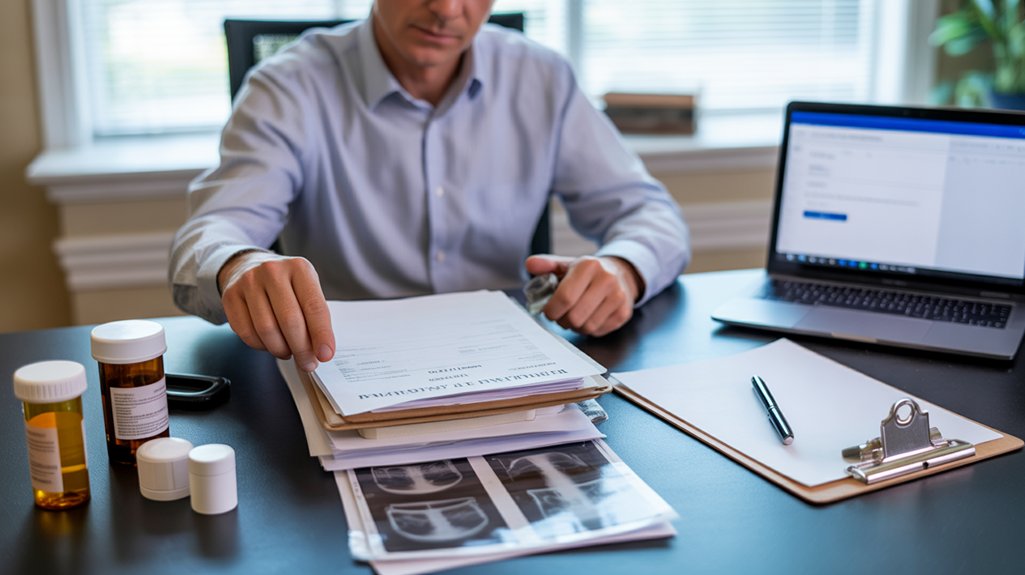

Medical evidence can be the backbone of your injury claim, but only if you gather it like pieces of a puzzle. You’ll need emergency notes, imaging reports, prescriptions, bills, and complete records from every provider, all organized in a way that shows your treatment timeline. The details you collect now can either strengthen your claim or leave gaps an insurer will notice, so the next steps matter more than you might think.
Main Points
- Collect early records first: ER notes, urgent care charts, ambulance reports, and your first doctor visit summary.
- Request complete charts from every provider, including diagnoses, treatment plans, referrals, follow-up instructions, and confirmation of dates.
- Gather imaging, test results, photos, prescriptions, bills, receipts, and discharge papers showing injury severity and financial impact.
- Organize evidence chronologically in labeled folders or files, with a simple index and clear file names.
- Track symptoms, missed activities, and any care gaps, and document reasons for missed or stopped treatment.
What Medical Evidence to Collect First

Start by collecting the records that most directly show what happened and when.
Start by gathering records that clearly show what happened and when.
Focus on the initial emergency room notes, urgent care charts, ambulance reports, and first doctor visit summaries. These documents usually capture your injury, your symptoms, and the event’s timing before memories fade or details change.
Add any imaging reports, such as X-rays, CT scans, or MRIs, because they can confirm the extent of the harm.
You should also gather discharge papers, prescriptions, and work restrictions, since they show how your injury affected your daily life.
Keep every bill and receipt tied to treatment. Save photos of visible injuries and a simple written timeline of symptoms, pain, and missed activities.
The sooner you organize these records, the stronger and clearer your claim will be.
Get the Right Records From Every Provider
Once you’ve gathered the basics, request records from every provider involved in your care so nothing important gets missed. Ask for complete charts from your doctor, urgent care clinic, hospital, physical therapist, chiropractor, and any specialist you saw after the injury. Make sure each request covers office notes, diagnoses, treatment plans, referral letters, and follow-up instructions. If you went to more than one location, confirm the dates and spellings so staff can find the right file.
You should also tell providers the records are for a claim, since they may have a faster process for legal requests. Keep copies of every request and response, and note who you spoke with. When you organize everything, you’ll create a clear treatment history that shows how your injury was evaluated and managed over time.
Use Test Results, Photos, and Bills
Along with your medical records, gather any test results, photos, and bills that help show what happened and what it cost.
X-rays, MRIs, lab reports, and doctor notes can confirm the severity of your injury and connect it to the accident.
X-rays, MRIs, and doctor notes can confirm the extent of your injury and link it to the accident.
Photos can show visible harm, bruising, swelling, damaged property, or the scene itself. Capture images as soon as you can, because injuries and conditions can change quickly.
Bills matter too, because they show what you paid or still owe for emergency care, follow-up visits, medication, therapy, and medical equipment. Keep copies of every invoice and receipt, even for small expenses.
Together, these items support your claim by showing both the impact of the injury and the financial burden you’ve taken on.
Organize Medical Evidence for Your Claim
To make your claim easier to review, organize every piece of medical evidence in one clear system. Put records, test results, imaging reports, prescriptions, bills, and photos into separate folders or labeled digital files.
Then arrange them by date so anyone reviewing your claim can trace your treatment from the first visit to your latest appointment. Create a simple index that lists each document and where it’s stored.
Keep copies of everything, and store the originals somewhere safe. If you receive new paperwork, add it right away so your file stays current.
Use clear file names, like “ER Visit 03-14-24” or “MRI Results 04-02-24.” When your evidence is neat and easy to follow, you save time, reduce confusion, and make your injury claim stronger.
Avoid Gaps That Weaken Injury Claims
Missing treatment can make an injury claim look weaker, even when your injuries are real. You should follow every recommended appointment, fill prescriptions, and keep your providers updated if pain changes. If you miss care because of work, cost, or transport, document why and reschedule fast. Consistent records show the injury’s true impact.
| Gap Type | Risk | Fix |
|---|---|---|
| Missed visits | Suggests recovery | Reschedule quickly |
| Stopped therapy | Breaks causation | Explain the reason |
| No follow-up | Weakens severity | Track symptoms |
| Late reporting | Creates doubt | Tell providers promptly |
Keep a simple log of symptoms, medications, and limitations. Share it with your lawyer so they can explain any gap and protect your claim.
Frequently Asked Questions
Do I Need Expert Testimony for My Injury Claim?
Not always—you may not need expert testimony if your records clearly show injury and causation. But you’ll often benefit from an expert when your case is complex, disputed, or involves lasting harm.
Can Family Members Provide Useful Medical Evidence?
Yes, your family can help, like lanterns guiding you through fog, by describing your symptoms, daily struggles, and changes they’ve seen. But you’ll still need medical records and expert opinions to strengthen your claim.
How Do Preexisting Conditions Affect My Claim?
Preexisting conditions can reduce your claim if you can’t show the injury worsened them, but you can still recover damages for aggravation. You’ll need clear records, doctor notes, and comparisons with your prior condition.
Should I Get a Second Opinion After Treatment?
Yes, you should get a second opinion if you’re unsure about your diagnosis, treatment, or recovery. You’ll strengthen your understanding, catch mistakes, and support your claim with clearer medical evidence.
Are Mental Health Records Relevant to My Injury Case?
Yes, your mental health records can matter. They can show pain’s shadow on your life, like thunderclouds after impact. You should share relevant notes, because they may support emotional distress, treatment needs, and overall damages.
See The Next Post
When you gather medical evidence quickly and keep it organized, you give your injury claim real strength. Start with emergency notes, imaging, prescriptions, and bills, then add photos and test results. One study found that nearly 1 in 3 injury claims are delayed by missing records, which can be stressful when you’re already hurting. Don’t let gaps weaken your case. Stay consistent with treatment, track every symptom, and keep every document that supports your recovery.



0 Comments