
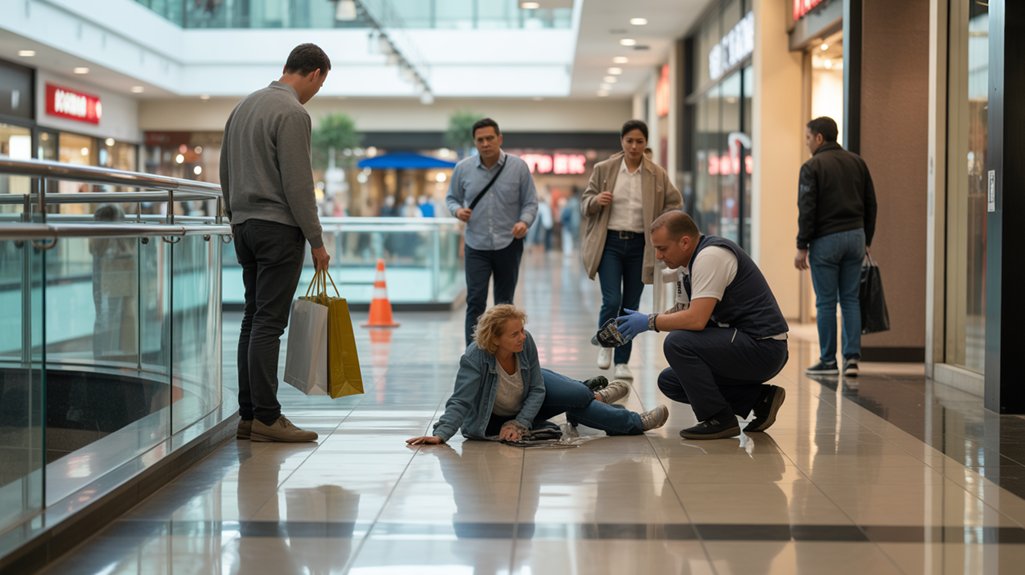
About one in five injury claims at retail properties involve slip-and-fall hazards, which means a San Fernando Valley mall accident can raise more than one question about fault. You might think the store is to blame, but the mall owner, property manager, or even a contractor could share responsibility depending on who controlled the area and ignored the danger. The details often decide everything, and they aren’t always where you’d expect.
Main Points
- The store, mall owner, property manager, or contractor may be liable if their negligence caused the hazard or failed to fix it.
- Mall owners must keep common areas like hallways, parking lots, and food courts reasonably safe for shoppers.
- Store operators can be responsible for hazards inside their leased space, especially if employees created or ignored the danger.
- Other shoppers, delivery drivers, or vendors may also be liable if they directly caused the injury.
- Photos, witnesses, incident reports, and maintenance records help prove who knew about the hazard and caused your losses.
Who Can Be Liable for Mall Injuries?
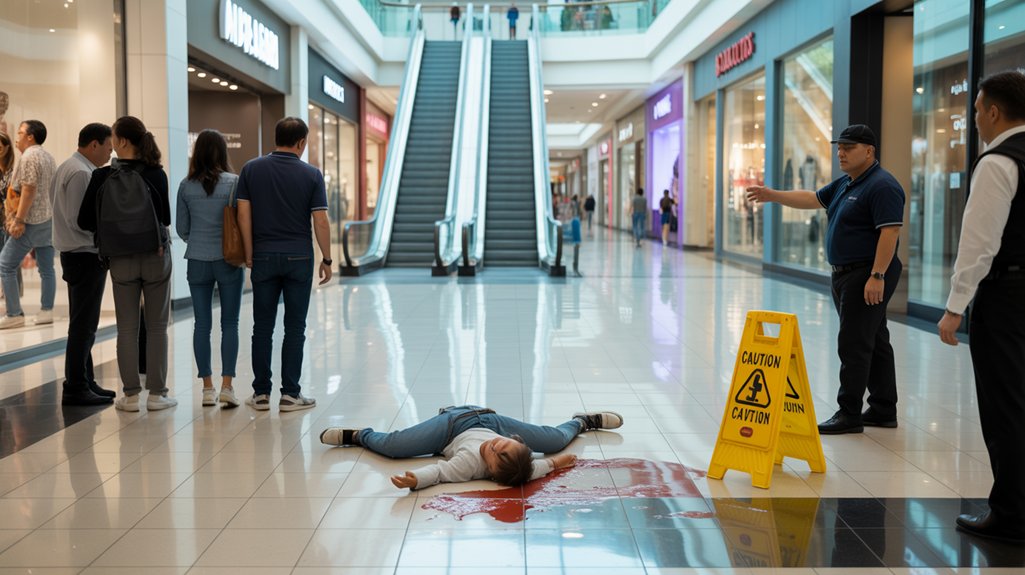
When you’re injured at a shopping mall, more than one party may be responsible. You might’ve a claim against the store where the hazard existed, especially if employees created it or failed to fix it.
The mall owner or property manager could also be liable if they ignored dangerous conditions in common areas, such as spills, broken flooring, or poor lighting. In some situations, a cleaning company, security contractor, or maintenance vendor may share fault if its work caused the danger or didn’t prevent it.
If a third party, like another shopper or delivery driver, injured you, that person may also owe you damages. You need to identify every responsible party so you can pursue full compensation for your medical bills, lost wages, and pain.
Why the Mall Owner’s Duty Matters
The mall owner’s duty matters because the owner is usually responsible for keeping common areas reasonably safe for shoppers, tenants, and guests.
Mall owners must keep common areas reasonably safe for shoppers, tenants, and guests.
If you’re hurt in a hallway, parking lot, stairwell, or food court, the owner’s failure to inspect, fix, or warn about hazards can be central to your claim. You don’t need to prove the danger was hidden or rare; you need to show the owner knew or should’ve known about the risk and didn’t act reasonably.
That duty also helps define who should answer for poor lighting, broken flooring, spills, or missing handrails in shared spaces.
When you understand this responsibility, you can better identify the right defendant, preserve evidence, and assess whether negligence caused your injury.
When a Store Operator May Be Responsible
Mall owners aren’t always the only ones responsible for an injury. If you get hurt inside a store, the operator may share liability when it controls the area where you fell or was responsible for keeping it safe.
You might’ve a claim if the business managed its own sales floor, fitting rooms, display areas, or stockroom and failed to protect customers. Store operators also may be responsible when their employees create a hazard, ignore a known danger, or fail to follow their own safety procedures.
In a mall, responsibility can overlap, so the store’s lease and day-to-day control matter. If the injury happened in a space the store used and controlled, the operator may need to answer for what went wrong and why it happened.
How Unsafe Conditions Lead to Claims
Unsafe conditions at a San Fernando Valley shopping mall can quickly turn into a claim when you slip on wet floors, trip over uneven walkways, or miss a hidden hazard.
Poor lighting can make those dangers harder to spot, increasing your risk of injury.
Broken fixtures, loose railings, and damaged displays can also show that the property owner didn’t keep the area safe.
Slip And Trip Hazards
Slip and trip hazards often cause injuries in shopping malls when water, spilled drinks, uneven flooring, loose mats, poor lighting, or cluttered walkways go unchecked. You can slip on a wet tile near an entrance, trip over a torn mat by a store, or catch your foot on cracked pavement outside.
When mall staff or tenants don’t clean spills, fix broken surfaces, or keep aisles clear, they may create a dangerous condition. If you fall, you may face medical bills, missed work, and lasting pain.
You can strengthen a claim by documenting the hazard, reporting it right away, and getting witness names. Photos, incident reports, and medical records can help show the mall failed to keep the area reasonably safe for you.
Poor Lighting Dangers
Poor lighting can turn a shopping mall walkway, stairwell, or parking area into a hidden hazard because you may not see a curb, step, spill, or obstacle until it’s too late. You can miss changes in floor level, overlook wet patches, or fail to notice someone walking in front of you.
When a mall leaves you in the dark, your risk of a fall or collision rises fast. If the poor lighting made the area unreasonably unsafe, you may have a claim against the party responsible for maintaining the premises.
You should document where the incident happened, note the lighting conditions, and get witness names. Photos, medical records, and incident reports can help show how the darkness contributed to your injury and your losses.
Broken Fixtures Liability
Broken fixtures can create serious hazards in a shopping mall, from cracked handrails and loose tiles to broken escalators, damaged elevator doors, and shattered light covers.
If you trip, slip, or get hurt because the mall ignored a known defect, you may have a claim against the property owner, tenant, or maintenance company. You’ll need to show they knew, or should’ve known, about the problem and failed to fix it or warn you in time.
Photos, witness statements, incident reports, and medical records can help prove liability. Broken fixtures often point to poor inspection and repair practices, which can strengthen your case.
When unsafe equipment or structural damage causes your injury, California premises liability law may let you seek compensation for your medical bills, lost income, and pain.
What Evidence Strengthens Your Mall Injury Case
Strong evidence can make or break your mall injury claim, so start gathering it as soon as you can. Photograph the exact spot where you fell or were hurt, including floor conditions, nearby signs, lighting, and any broken object involved.
Photograph the exact spot, floor conditions, signs, lighting, and anything broken before evidence disappears.
Save the shoes and clothing you wore, and don’t wash or repair them. Ask witnesses for their names and contact information while the details are fresh.
Request incident reports, security camera footage, and maintenance records before they disappear. Keep every medical record, bill, and receipt tied to your treatment and missed work.
Write down what happened, when it happened, and how your injuries affect your daily routine. If you can, return later to document changes at the scene and preserve proof of what you experienced.
How California Premises Liability Applies
California premises liability means the mall owner or operator has a duty to keep common areas reasonably safe for you.
If a dangerous condition like a spill, broken tile, or poor lighting caused your injury, you may have a claim.
To recover compensation, you’ll need to show the owner knew or should’ve known about the hazard and didn’t fix it.
Duty of Care
When you step into a shopping mall in the San Fernando Valley, the property owner and anyone else in control of the premises must use reasonable care to keep the area safe for visitors. That duty can extend to landlords, tenants, management companies, and maintenance contractors, depending on who controls the area where you were hurt.
California law expects them to act like careful property operators, not perfect insurers. You don’t have to prove they meant to cause harm; you only need to show they owed you a duty and failed to meet it.
If they ignored their responsibilities, you may have a premises liability claim. The exact relationship between the parties and the injured visitor matters, because control over the space often determines who bears legal responsibility.
Dangerous Conditions
A dangerous condition is more than a minor mess or ordinary wear and tear—it’s a hazard on the property that creates an unreasonable risk of harm, like a broken handrail, a wet floor without warning signs, poor lighting, uneven pavement, or falling merchandise.
If you’re hurt at a San Fernando Valley shopping mall, California premises liability may apply when a condition on the property makes the area unsafe for shoppers. The issue isn’t whether the mall was perfect; it’s whether the condition exposed you to a foreseeable danger.
A spill in a busy walkway, a loose tile near an entrance, or clutter blocking a path can all qualify. When a mall leaves a hazard in place, you may have a claim for your injuries and related losses.
Proving Negligence
To recover compensation after a mall injury, you must show that the property owner, manager, or another responsible party was negligent. In California, that means you need evidence they knew, or should’ve known, about a dangerous condition and failed to fix it or warn you. You can prove this with surveillance video, incident reports, witness statements, maintenance logs, or photos of the hazard.
You also need to show the condition caused your injuries, not your own independent actions. If the mall ignored spills, broken tiles, poor lighting, or unsafe walkways, that can support your claim. A lawyer can help you gather proof, identify every liable party, and connect the hazard to your medical losses and other damages.
What Compensation You May Recover
If someone else’s negligence caused your injury, you may recover compensation for the losses it created.
You can seek payment for medical bills, including emergency care, surgery, therapy, medication, and future treatment.
If you missed work, you may claim lost wages and reduced earning ability.
You can also recover damages for pain, suffering, emotional distress, and the ways the injury limits your daily life.
If your belongings were damaged, you may pursue repair or replacement costs.
In serious cases, you may need compensation for long-term care or home modifications.
Keep records of every expense, diagnosis, and missed shift so you can prove what you’ve lost.
A strong claim can help you move forward after a mall injury and ease the financial burden.
Frequently Asked Questions
Can I Still Recover if I Was Partially at Fault?
Yes, you can still recover if you were partly at fault. Your compensation may drop by your percentage of fault, but you can still pursue damages if someone else also caused your injury.
What Should I Do Immediately After a Mall Injury?
First, you should get to safety, then report the injury to mall management, take photos, collect witness names, and seek medical care. Don’t leave the scene too quickly—evidence can disappear, and your claim may depend on it.
How Long Do I Have to File a Claim?
You usually have two years to file a personal injury claim in California, but you shouldn’t wait. Act quickly, because evidence disappears and some claims against government-owned property have shorter deadlines.
Are Security Camera Videos Available to Injured Visitors?
Yes, if cameras caught your accident, you can request the video—think of it as your own “black box.” You’ll need to act fast, because malls often overwrite footage and won’t keep it forever.
Can a Child’s Mall Injury Claim Be Different?
Yes, your child’s claim can differ because minors often need a parent or guardian to act, and courts may scrutinize damages differently. You’ll also face special deadlines, approval rules, and settlement protections for the child.
See The Next Post
If you’re hurt at a San Fernando Valley mall, don’t assume one party is to blame. Like a relay race, responsibility can pass from the store, to the mall owner, to a contractor, depending on who controlled the area and ignored the danger. One shopper once slipped on a leaking pipe near a food court—later, the repair company, not the store, took the lead in the claim. Save evidence fast, because proof can decide your recovery.


0 Comments