


You probably don’t realize that a strong injury claim is built on more than medical bills alone. You need clear records, scene photos, witness details, police reports, and proof of lost income to connect the accident to your losses. When one piece is missing, the claim can weaken fast. The key is knowing what matters most, and that’s where things get interesting.
Main Points
- Gather scene photos, videos, and preserved physical evidence showing the accident conditions and damage.
- Collect medical records, imaging, prescriptions, and therapy notes proving your injuries and treatment.
- Get witness statements and the police report to confirm what happened and who was involved.
- Keep financial records like pay stubs, tax returns, bills, and expense receipts to prove losses.
- Organize all evidence consistently, with dates and labels, and explain any gaps in documentation.
What Evidence Helps Prove Your Injury Claim?
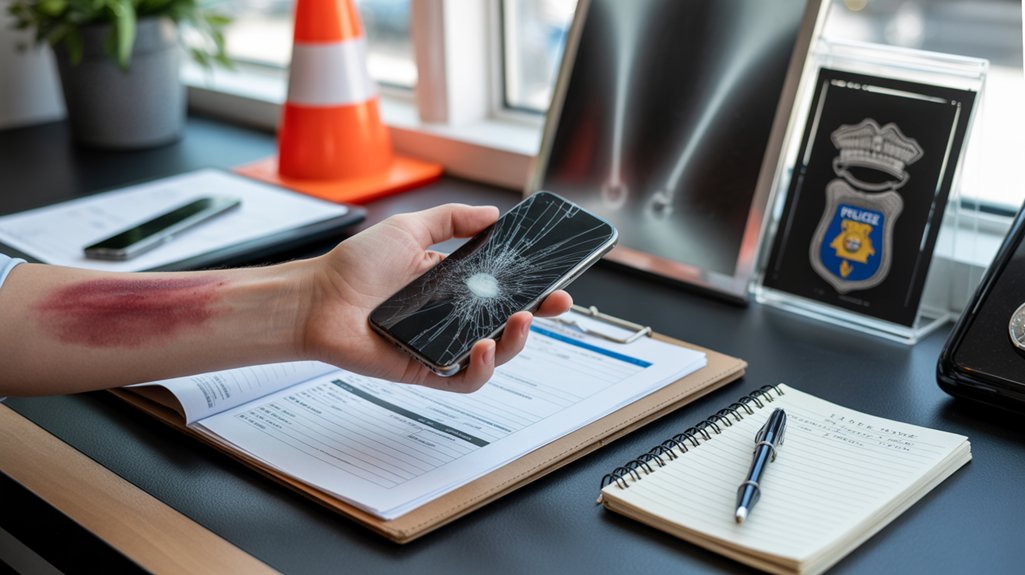
To prove your injury claim, you need evidence that clearly connects the accident to your injuries and losses.
To prove your injury claim, you need evidence that clearly links the accident to your injuries and losses.
You should gather photos of the scene, damaged property, visible injuries, and weather or road conditions.
Secure witness names and contact details while memories stay fresh.
If police responded, request the report because it can support how the crash happened and who caused it.
Keep pay stubs, repair estimates, and receipts to show financial losses.
Save emails, texts, and notes about missed work, pain, and daily limitations.
Preserve any physical evidence, like torn clothing or broken gear, if it helps explain the incident.
The stronger and more organized your proof, the easier it becomes to show fault, causation, and damages.
Medical Records That Show Your Injuries
Medical records often provide the clearest proof that your injuries are real and tied to the accident.
You should gather every note, diagnosis, test result, prescription, and treatment summary from doctors, hospitals, urgent care, and physical therapists. These records help show when symptoms started, how severe they are, and whether you followed care plans. Consistent documentation also makes it harder for an insurer to question your claim. Keep copies of:
- ER visit summaries
- Imaging reports
- Doctor’s charts
- Medication lists
- Therapy progress notes
If you missed appointments, explain why, because gaps can weaken your case. Ask for records soon, since clinics may take time to respond.
Clear medical paperwork gives your claim a stronger foundation and helps connect your injury to your losses.
Photos, Videos, and Accident Scene Proof
Photos and videos can lock in what the scene looked like before anything changed. You should take wide shots that show the full area, then close-ups that capture damage, hazards, skid marks, broken parts, lighting, and weather conditions.
Use your phone to record short videos that show how the scene connects, especially if something moved, spilled, or fell. Include time-stamped images when you can, and save the original files so metadata stays intact.
If you have visible injuries, photograph them early and again over the next few days to show changes. Keep your footage organized in one folder with labels for date and location.
Strong visual proof helps you show what happened, where it happened, and why it caused your injury claim to matter.
Witness Statements and Police Reports
Witness statements and police reports can back up your claim by filling in details you may not remember or couldn’t see.
When you speak with witnesses, ask for names, phone numbers, and a quick account while the event is fresh. Their observations can confirm how the accident happened and who caused it.
A police report gives you an official record of the scene, the people involved, and any citations or findings. You should review it carefully for errors and ask for corrections if needed.
These documents strengthen your story, show consistency, and help support your version of events.
- Collect statements soon after the incident.
- Keep witness contact details organized.
- Request the report number right away.
- Check the report for factual mistakes.
- Save every version you receive.
Lost Income and Other Damage Records
Lost wages can add up fast after an injury, so you’ll want records that clearly show what you missed and what it cost you. Save pay stubs, tax returns, work schedules, and a letter from your employer confirming your missed time and pay rate. If you’re self-employed, gather invoices, bank records, and canceled jobs. Track every expense tied to the injury, including medical bills, prescriptions, mileage, parking, and home care.
| Record | Why it matters |
|---|---|
| Pay stubs | Prove your usual earnings |
| Employer letter | Confirms missed work |
| Tax returns | Show income history |
| Receipts | Verify out-of-pocket costs |
| Mileage log | Supports travel expenses |
These documents help you calculate losses and back up your claim with clear, reliable proof.
Frequently Asked Questions
How Long Do I Have to File an Injury Claim?
You usually have a limited time, often one to three years, to file, but deadlines vary by state and claim type. You should act quickly, because missing the deadline can bar your recovery completely.
Should I Speak With the Insurance Adjuster Directly?
You shouldn’t speak with the insurance adjuster directly without caution. They may use your words against you. Let your lawyer handle calls, or keep it brief, factual, and avoid guessing about injuries, fault, or damages.
Can Pre-Existing Conditions Affect My Claim?
Yes, they can be a storm cloud over your claim, but you can still recover. You should prove the accident worsened your condition with medical records, doctor notes, and clear timelines to strengthen your case.
Do I Need a Lawyer for a Strong Injury Claim?
You don’t always need a lawyer, but you’ll often strengthen your claim with one. You can gather evidence, negotiate, and file yourself, yet an experienced attorney can spot issues, value damages, and handle insurers.
What if the At-Fault Party Denies Responsibility?
If they deny it, you’ll need to prove fault with photos, witness statements, reports, and medical records. Their denial can seem strong, but solid evidence can make your claim stronger and harder to dispute.
See The Next Post
In the end, your injury claim is only as strong as the proof you pile up. Save every medical record, snap every photo, keep every receipt, and gather witness details like your case depends on it—because it does. A single missing document can make a huge difference, while a well-organized file can feel almost bulletproof. The more clearly you connect the accident to your injuries, the harder it is for anyone to ignore your claim.



0 Comments